
Branded (Dynata)
Data AnalysisUpdated October 5, 2026
Dynata is an AI-powered research platform providing direct access to 60 million verified consumers for real-time market insights.
We may earn a commission when you sign up through our links. It does not affect our reviews.
What is Branded (Dynata)?
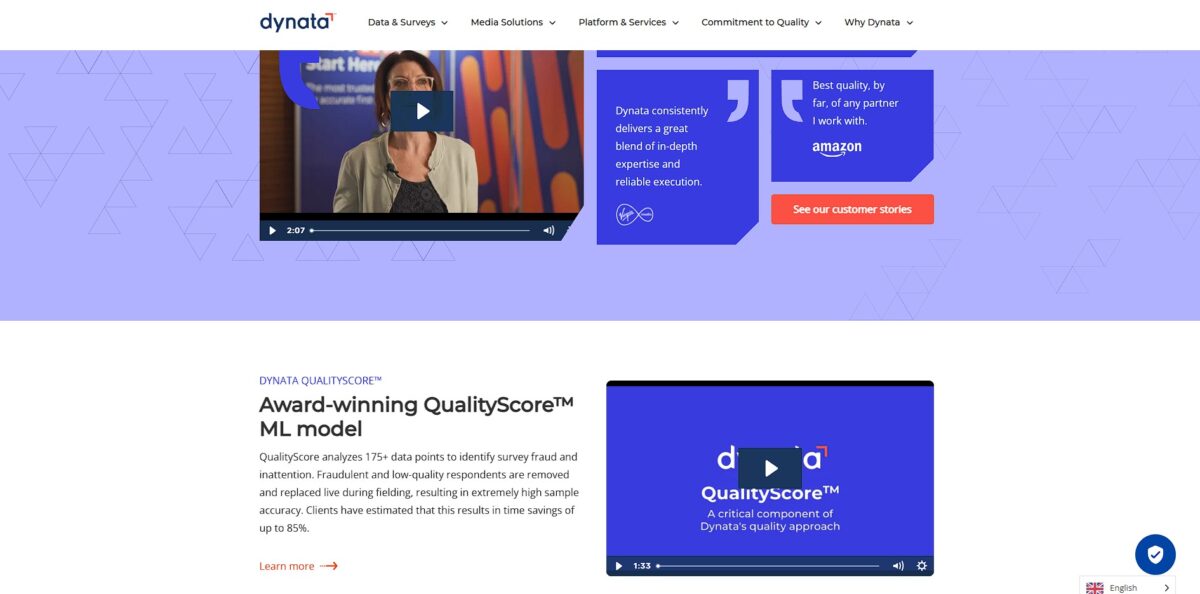
Dynata operates as a massive data engine that connects businesses directly to a global network of over 60 million opted-in survey participants. It moves beyond simple polling by offering API access to first-party data, allowing you to feed verified consumer profiles straight into your own analytics stack. It excels at deep demographic filters for niche research, though the scale can feel overwhelming if you only need a quick, small-batch pulse check. The payoff is less guesswork in audience targeting, since your marketing models rely on actual human responses rather than synthetic approximations. Skip this if you lack a dedicated data analyst to parse the high-volume output; otherwise, use their automated verification to scrub out duplicate respondents before they hit your database.
How to start using Branded (Dynata)?
Skip the generic homepage tour. Your first move is deciding between their self-service portal or the managed route. If you want to move fast, head straight to the “Get Started” or “Request a Quote” button to trigger a contact from their account team. They don’t typically offer a “click-and-pay” checkout for newcomers without a quick vetting of your research needs. This gates the platform but ensures you aren’t trying to field a study that their panel cannot actually fulfill.
Once you have your credentials, log into the Dynata Insights Platform. This is where you’ll define your target audience using specific filters like age, region, or niche behavioral traits. I noticed the interface feels more like a professional workstation than a consumer tool, which is great for precision but might feel heavy if you just want a quick five-question poll. Precise targeting prevents wasting budget on respondents who don’t fit your exact buyer persona.
Next, you’ll build your survey logic or integrate an external link from platforms like Qualtrics. If you are using their internal “Cmix” tool, focus on mobile-first design early on. You can preview skip patterns and validation rules across different devices before committing. Testing these paths manually is a chore, but it catches broken logic that would otherwise disqualify genuine participants. This ensures your data remains clean and your respondent completion rates stay high.
The final step involves the checkout and launch phase. Review the feasibility metrics to see how many completes you can realistically expect within your timeframe. You can set a “soft launch” to gather a small percentage of responses first, allowing you to check for any weird data patterns before opening the floodgates. Monitoring fieldwork in real-time lets you adjust quotas if a specific demographic is lagging. Use a soft launch to verify your screening questions aren’t accidentally kicking out your primary audience.
Who is it for?
Enterprise Market Researchers
They need to validate consumer sentiment across massive, permissioned panels without relying on shaky third-party cookies. It’s ideal for deep-dive trackers, though the sheer scale can feel like overkill for quick, one-off hobbyist polls. Accessing 60 million verified humans ensures the data reflects actual people rather than bot farms.
Media Agency Strategists
These users bridge the gap between “what people say” and “where to show ads” by exporting survey-defined segments directly into DSPs like The Trade Desk. Instead of guessing based on broad demographics, they target specific attitudinal groups, such as parents who value sustainability over price. This matters because it reduces wasted ad spend on audiences who will never convert.
Political Pollsters and Campaign Managers
They use it to measure voter resonance and immediately activate those insights into addressable media audiences for swing-state targeting. The platform handles the heavy lifting of matching registration data to digital IDs in a privacy-compliant way. This allows campaigns to pivot messaging based on real-time feedback from specific voter blocks.
Product Managers in Heavily Regulated Industries
Specialists in healthcare or finance rely on the vetted B2B and patient panels to find hard-to-reach professionals who usually ignore standard web pop-ups. Their healthcare panels alone cover over 300 ailments, which makes niche respondents easier to find. Getting reliable feedback from a surgeon is significantly harder than finding a general consumer.
B2B Lead Gen Specialists
They use the platform to build prospect lists based on self-reported professional attributes rather than inferred LinkedIn data. It works well for identifying high-intent business decision-makers, though the enterprise-level pricing might be steep for smaller startups. Direct access to 3 million profiled professionals speeds up the transition from research to sales outreach.
Branded (Dynata) pricing
Dynata does not publish a standard price list. Its cost model depends on the complexity of your survey, the specific audience demographics you need, and the geographic reach of the study. You will likely find that niche B2B panels cost significantly more than general consumer groups.
The platform operates on a quote-based system. Small, localized projects might be accessible, but large-scale, multi-country studies require a custom enterprise agreement. You pay for the difficulty of finding respondents; if you need a specific type of software engineer in three countries, expect the price to jump. The Dynata+ platform allows for some real-time pricing projections based on your audience criteria before you launch. This helps avoid budget surprises during the fieldwork phase. Managed services for survey programming and data visualization are available as add-ons, though these will increase your final bill.
Branded (Dynata) key features
Direct API Access for Data Streaming
Plug Dynata’s first-party data directly into your own BI tools or CRM instead of manually exporting CSVs. This eliminates the lag between survey completion and analysis. You get fresh consumer sentiment without the manual data entry grind.
Verified Audience Customization
Filter through 60 million opted-in participants using specific niche attributes rather than broad categories. It stops you from wasting budget on general responses when you need feedback from, say, IT decision-makers in the Midwest. Narrow targeting means your data reflects the exact people making the purchase decisions.
Automated Data Verification
Use AI-driven checks to catch bots or low-effort responses before they hit your final report. I noticed this cuts down on the time spent manually scrubbing “straight-lined” survey results. Why this matters: Clean data means you can trust your insights without second-guessing every outlier.
Self-Serve Brand Lift Studies
Launch and track brand impact surveys through a simplified portal instead of waiting on a managed account team. This gives smaller teams the same tracking power as massive agencies without the overhead.
First-Party Data Connectivity
Connect your internal customer lists with Dynata’s panel to find lookalike audiences for better modeling. It helps bridge the gap between what your customers do and what the broader market thinks. Together, they give you a 360-degree view of your brand’s position relative to competitors.
Branded (Dynata) Pros & Cons
Pros
Dynata gives you direct access to 60 million opted-in contributors, skipping the uncertainty of third-party cookies. You can drill down into specific niches to find verified homeowners or tech early adopters instead of guessing based on browsing history. Their API integration lets these consumer insights flow directly into your own data stack, which helps automate brand lift tracking without manual spreadsheet exports. This matters because it replaces retroactive behavioral data with actual consumer intent in real-time. Start with their self-service portal for quick brand pulse checks before committing to a full managed study.
Cons
The lack of transparent, fixed pricing means you spend time waiting for custom quotes before you can budget a project. Smaller startups might find the enterprise-scale focus overkill, as the depth of demographic filtering often pushes costs higher for niche segments. Since it relies on human responses, you have to watch for fatigue in long surveys which can lead to lower data quality if the incentive doesn’t match the effort. The trade-off for such massive reach is a steeper learning curve when configuring complex waterfall logic for audience targeting. Use this tool for large-scale validation of consumer attitudes rather than quick, low-budget social polls.
Use Branded (Dynata) if you want…
- Reach high-quality, verified first-party global audiences instantly.
- Measure real-time brand lift across multiple media channels.
- Uncover deep consumer insights with AI-powered research tools.
- Scale hyper-targeted advertising campaigns using precision sampling.
- Validate product concepts with niche, hard-to-reach demographics.
- Optimize marketing ROI through data-driven performance tracking.
- Access solid API integrations for automated data flows.
- Bridge gaps between brand perception and actual buyer behavior.
Branded (Dynata) alternatives
Branded (Dynata) Reviews
The API access to first-party data is a game changer for our consumer research, though getting a custom quote took longer than expected.
Great for reaching specific global audiences, but the interface for managing self-serve studies can feel a bit clunky at times.
The data verification is solid and helps us avoid the usual bot issues, but the pricing is definitely geared toward enterprise budgets.
Excellent scale for deep-dive trackers, but don’t expect a quick setup if you’re looking for a simple one-off survey.
FAQ
Is Dynata a legitimate company?
Yes, Dynata is a legitimate global market research company headquartered in the United States that has been in operation for over 45 years, formerly known as SSI and Research Now.
Why is Dynata calling me?
Dynata likely received your phone number through public records or third-party data providers and is calling to invite you to participate in a research survey on behalf of their clients.
How can I stop receiving calls from Dynata?
You can request to be placed on Dynata’s no-contact list by calling their automated opt-out line at 1-833-757-1746 in North America or 1-801-341-0764 for international requests.
Does Dynata use my data to train AI models?
Dynata utilizes AI and machine learning for data verification and fraud detection through its QualityScore model, but it primarily functions as a first-party data provider for market insights rather than a model training platform.
How large is the Dynata research panel?
Dynata maintains the industry’s largest first-party data panel, consisting of over 60 million verified and deeply profiled consumers and business professionals worldwide.
What kind of information does a Dynata survey typically ask for?
Legitimate Dynata surveys typically ask for opinions on consumer habits, brand awareness, or political views, and will never ask for sensitive personal information like your Social Security number or credit card details.
Can I use Dynata for academic research?
Yes, Dynata is frequently used by academic institutions and graduate students to collect research-grade data that meets the standards for peer-reviewed journals and scholarly publication.
Similar tools
 HexCollaborative analytics workspace that mixes SQL, Python and AI agents in notebooks, then publishes results as data apps and plain-language answers.
 WindwardMaritime AI platform that fuses AIS, satellite and ownership data into vessel risk scores, sanctions screening, alerts and container ETAs.
 Delve AIAI market research platform that builds personas from analytics, CRM and social data, then lets you chat with them or run synthetic